PopCat Tiles: Piano & Music
- 4.2
- Rating
- 10.00M
- Installs
- Free
- Price

 Analysis by App-foxy
I spent time with PopCat Tiles: Piano & Music as a quick, rhythm-focused game, and my first impression was that it understands the appeal of music games very well: the rules are immediate, the screen is easy to read, and the cute cat theme gives every tap a lighter personality. You are not learning a complicated control scheme. You are trying to keep your fingers aligned with the beat while the game gradually asks for more accuracy and composure.
That simplicity is both its strongest quality and its main limitation. I can open it for a short break, understand what I need to do almost instantly, and feel a small sense of achievement after a clean run. At the same time, players looking for a deep rhythm editor, a large competitive ecosystem, or a story-driven music experience may find the format too focused. This is a compact mobile game from JMGame, built around timing rather than long sessions or elaborate exploration.
How the first goals make the game easy to enter
The opening goal is refreshingly clear: tap the tiles in time and avoid losing your rhythm. That clarity matters on a phone, where I may be playing with one hand, waiting for transport, or taking a short pause between other tasks. I never felt that I needed to study a tutorial before understanding the basic challenge. The visual presentation points me toward the next action, while the music gives the taps a natural pulse.
You May Also Like

 Blood Strike: 2.5 Anniversary
Blood Strike’s Loadouts Turn Every Drop Into a Tactical Gamble
A close look at Blood Strike’s custom loadouts: how fast access to signature weapons reshapes its battle royale rhythm, rewards preparation, and narrows the gap between fights.

 Pandora - Music & Podcasts
Pandora’s Music Is Easy to Start, but Harder to Recover
Pandora’s strength is its low-effort path from a seed to a station. Its weak spot is how much confidence it asks you to place in connection, setup, and quiet recovery.

 8 Ball Pool
 Is Built on Rivalries, Rematches, and Routine
A close look at the rivalries, rematches, shared routines, and unanswered safety questions that turn a quick pool match into a persistent mobile community.

 Samsung Music
’s Quiet Strength Is Playing What You Already Own
Its reach comes less from spectacle than from dependable access to a personal library. That simplicity is both the app’s strongest retention engine and its ceiling.

 AccuWeather: Weather Radar
AccuWeather Review: A Quick, Clear Forecast for Everyday Decisions
For everyday plans, the best forecast is the one you can understand quickly. AccuWeather makes rain timing, radar, and local conditions easy to act on, with a few trade-offs.

 Hill Climb Racing
Why Hill Climb Racing Still Turns Crashes Into One More Run
A tiny car, a bumpy hill and one more upgrade: Hill Climb Racing keeps resurfacing because its simple chaos makes every near-miss feel personal.
More From Our News Desk



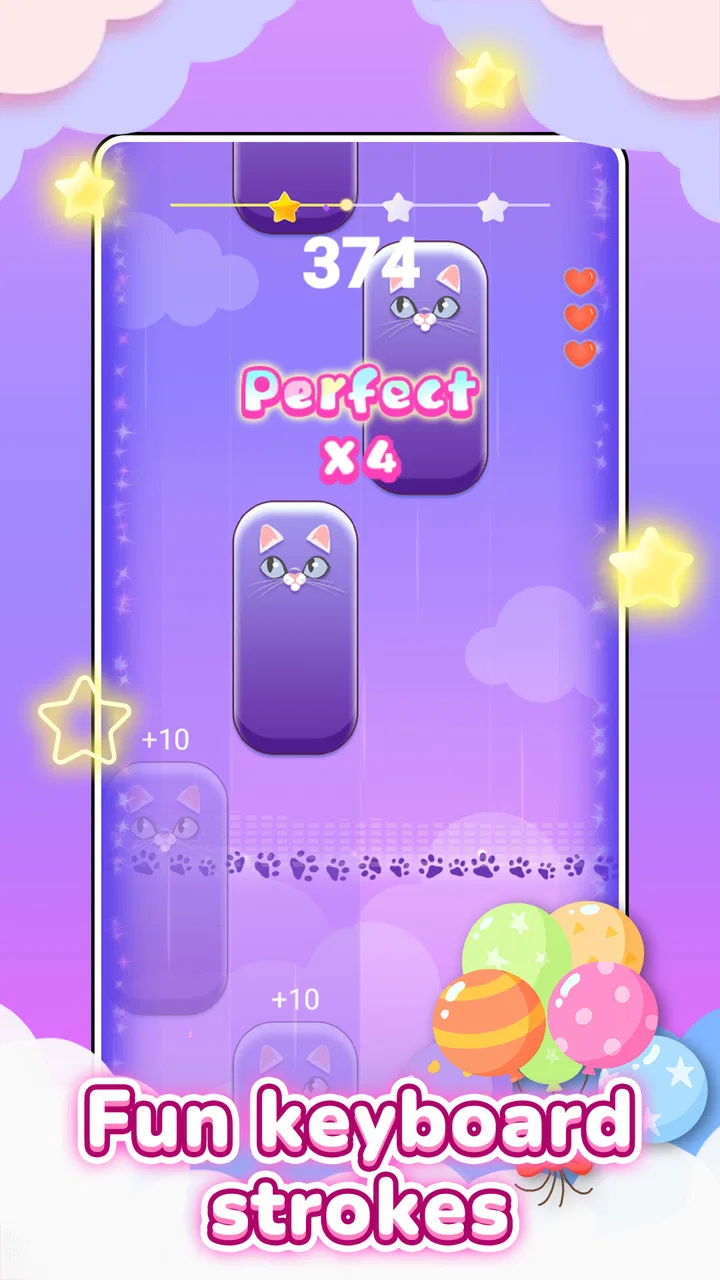
The cat styling helps the game feel less severe than some piano-tile alternatives. A mistake does not feel like failing a serious examination; it feels more like breaking a playful performance. That tone is useful for younger players and for anyone who prefers a friendly presentation. The content rating is Everyone, which fits the approachable design and makes it a reasonable casual choice for families, although younger players may still need guidance around optional purchases.
My early objective was not simply to tap quickly. It was to find a comfortable rhythm and stop reacting nervously to every new tile. That distinction is important. Players who rush their fingers can perform worse than players who keep a steady pace, and the game rewards attention more than frantic movement. I found it more satisfying when I treated each sequence as a short musical phrase instead of a test of raw speed.
There is also a useful psychological loop in the way the game presents small attempts. A run can be short enough that restarting does not feel like a major commitment. When I missed, I usually wanted to try again immediately, not because the game overwhelmed me with instructions, but because the mistake felt understandable. I knew that my timing had slipped, and I could test whether a calmer approach would improve the next attempt.
That makes it suitable for several everyday situations. I would use it during a brief waiting period when I want something more active than scrolling but less demanding than a full game session. It can also work as a gentle introduction to rhythm games for someone who has not played them before. The visual theme lowers the barrier, while the timing requirement gives the experience more substance than a simple tapping toy.
What progress feels like during ordinary play
The most useful progress signal is personal consistency. Instead of expecting a large role-playing system to carry the experience, I noticed improvement in smaller ways: recognizing patterns sooner, keeping my attention centered, and recovering more calmly after an imperfect tap. Those changes are easy to overlook, but they are exactly what make a rhythm game replayable. My hands began to anticipate the flow rather than chase every tile at the last moment.
For a new player, I recommend treating the first sessions as practice rather than trying to prove anything. Keep the phone steady, use a comfortable grip, and focus on the center of the screen rather than staring at the next tile too early. Looking too far ahead made me tense; watching the immediate sequence while listening to the beat gave me better control. That simple adjustment made more difference than tapping harder or faster.
Another practical tip is to play with a consistent posture. When I shifted between holding the phone in both hands and balancing it awkwardly in one, my timing became less reliable. The game itself is simple, so physical distractions become more noticeable. A stable grip gives the visual rhythm a fair chance to guide your fingers.
Sound is naturally important here, but the game can still be useful when I cannot play loudly. In a quiet public place, I would keep the volume low and rely more heavily on the visual movement. That changes the experience: the game becomes more about visual reaction than musical phrasing. With sound available, however, the beat gives me a stronger reference and makes successful sequences feel more connected to the music.
These details reveal who will enjoy it most. Players who like improving through repeated short attempts will probably appreciate the format. People who need a clear external reward after every session may find the progress less dramatic. The satisfaction comes from better timing and longer control, not from a large narrative reveal or a complex character build.
How the difficulty curve changes the mood
The difficulty works best when I allow it to build gradually. Early play feels welcoming because the core action is easy to understand. As the sequences demand more attention, the game shifts from casual tapping to concentration. The important change is not just speed; it is the pressure of maintaining accuracy while the next action arrives before I have fully relaxed from the previous one.
I noticed that difficulty exposes different weaknesses in different players. Someone with quick reactions may still struggle with maintaining an even rhythm. Someone who listens carefully may compensate for slower reflexes by anticipating the pattern. This gives the game a little more depth than its simple appearance suggests. It is not only testing how fast I can move; it is testing whether I can stay composed as the sequence becomes less forgiving.
When a run starts to feel too demanding, I found it better to stop for a moment than to force repeated frustrated attempts. Short rhythm games can encourage an unhelpful loop: miss, restart immediately, become tense, miss earlier, and blame the game. A brief pause resets attention. Returning with relaxed hands often produced a better result than trying to overpower the challenge.
This is also where the game may divide its audience. If you enjoy gradual mastery, the rising pressure gives you a reason to continue. If you mainly want a calm music toy, later challenges may feel more stressful than entertaining. I would not recommend it as a purely passive listening experience. The music is part of the interaction, and the game expects active concentration rather than background play.
Compared with more traditional piano-tile games, this one stands out through its cat-focused presentation and approachable mood rather than by replacing the familiar rhythm formula. Compared with full rhythm games that use elaborate song libraries, characters, or competitive layers, it feels much lighter. That can be an advantage when I want immediate play, but it also means it is not the best substitute for a serious music-game hobby.
Unlocks, goals, and the pressure to keep returning
The retention appeal comes from the desire to improve the next attempt. A clean sequence creates a small unfinished feeling: I know I can probably do a little better if I concentrate differently. That form of motivation is effective because it does not require a long session. I can return for a few minutes, work on control, and leave without feeling that I abandoned a major quest.
Still, the pacing depends heavily on whether the player enjoys repetition. If every attempt feels like the same test with no personal target, interest may fade. I kept the game engaging by setting my own goals: make fewer careless mistakes, maintain a steadier rhythm, or continue playing after a difficult section instead of immediately giving up. These goals are simple, but they make the sessions feel more intentional.
The game is free to play, which makes trying it low-risk. Optional in-app purchases range from $1.99 to $19.99 per item, so I would approach the purchase layer thoughtfully rather than tapping through it automatically. For a child, I would check the device’s purchase protections first. For myself, I would only consider spending if the game had already become a regular short-session habit; the free starting point is enough to judge whether the basic timing loop suits me.
That purchase range also affects how I view the game’s long-term value. A free rhythm game can be excellent as a small daily distraction, but it does not need to become a major spending commitment. I would avoid treating optional items as a requirement for enjoyment. The central question is whether the tapping itself remains satisfying. If it does, the game has a useful place on the phone even without turning every session into a collection project.
The large player base suggests that the concept has broad appeal: it has passed 10 million installs and holds a 4.4 average from around 36 thousand ratings. Those figures do not replace personal testing, but they match my impression that the game is easy to understand and comfortable for casual players. I would still separate popularity from depth. A widely accessible game can be fun without offering the layered progression that a dedicated rhythm fan expects.
Where the game fits among music-game alternatives
If I compare it with a standard piano-tile game, PopCat Tiles: Piano & Music feels more personable because the cat theme gives the familiar action a distinctive identity. That matters when several similar games compete for attention. The presentation makes the experience feel playful rather than purely mechanical, and it may be the deciding factor for someone who wants a softer visual style.
If I compare it with a rhythm game built around licensed performers, extensive song selection, or story progression, the trade-off is immediate accessibility. This game asks less preparation from me and is easier to understand in a short session. The alternative may offer more variety and a stronger long-term structure, but it can also demand more time, storage, attention, or commitment. I would choose this title when convenience matters more than breadth.
It is also different from a music-learning app. Tapping accurately can sharpen attention and timing, but I would not use it as a replacement for lessons, an instrument tutor, or structured practice. The game turns rhythm into an entertaining challenge; it does not need to teach notation or build a formal curriculum to succeed at that job.
For competitive players, the deciding issue is whether self-improvement is enough. I enjoyed chasing cleaner runs, but someone who needs rankings, detailed performance analysis, or a strong multiplayer scene may prefer another category of rhythm game. This title is better suited to personal repetition than to a serious esports-style routine.
Practical details before installing
JMGame lists the game as a free music title, and it supports devices running Android 7.0 or later. That makes it accessible to many older Android phones, although actual comfort will still depend on screen responsiveness, audio delay, and how securely the device handles touch input. Rhythm games are unusually sensitive to small distractions, so a phone that feels fine for reading may not feel equally good here.
The current version is 1.9.8, and the game was released on October 16, 2024. I mention those details because they help place the app in context when deciding whether it fits a newer or older device. The important practical test is simple: install it, play a few relaxed attempts, and notice whether the touch response feels consistent enough for your hands. If the controls feel late or uncomfortable, no amount of enthusiasm for the cat theme will solve that particular problem.
I would also think about the setting in which I plan to play. With headphones or a quiet room, the musical timing becomes more useful. In a noisy environment, visual concentration may carry more of the experience, but that can make difficult sections feel harder. The game works best when I can give it a small amount of uninterrupted attention rather than trying to play while multitasking.
My verdict on the progression and staying power
PopCat Tiles: Piano & Music succeeds because its early goal is obvious, its challenge can be felt immediately, and its sessions are short enough to fit ordinary life. The cat presentation gives the familiar rhythm format a friendly identity, while the increasing demand for accuracy provides a reason to replay. I especially liked that improvement can come from better listening and calmer movement, not just from faster fingers.
Its progression is not aimed at players who need a deep campaign or a large strategic system. The strongest long-term hook is the personal challenge of becoming more consistent. That is enough for a casual music game, but it may not sustain someone who expects constant unlocks, extensive customization, or a broad competitive structure. The optional purchases are another reason to keep expectations sensible: enjoy the core loop first, then decide whether anything beyond it genuinely adds value for you.
I would recommend it to families, casual players, and rhythm newcomers who want a cheerful game that can be understood in seconds. I would skip it in favor of a fuller rhythm alternative if my priority were a large music catalog, advanced performance feedback, or a long-form progression system. For everyone in between, this is a pleasant little game to keep available for those moments when I want music, concentration, and a few minutes of playful finger exercise without a heavy commitment.
My final take: the game is at its best when treated as a repeatable timing challenge, not as a complete music platform. Its goals are modest but clear, its difficulty can create satisfying tension, and its cute style makes failure easier to accept. If that balance sounds appealing, the free entry point makes it easy to try. Just remember that the real value is in the feel of the taps and the satisfaction of improving, not in expecting it to provide the depth of a much larger rhythm game.
FAQs for PopCat Tiles: Piano & Music
01What is PopCat Tiles: Piano & Music?
PopCat Tiles: Piano & Music is a musical rhythm game that combines engaging piano tile gameplay with popular cat-themed graphics. Players tap on tiles to play songs, aiming for high scores and unlocking new tracks. It's available for both Android and iOS devices, offering a delightful audio-visual experience.
02Is PopCat Tiles: Piano & Music free to play?
Yes, PopCat Tiles: Piano & Music is free to download and play. However, it may contain in-app purchases and ads. Players can choose to buy additional songs or features to enhance their gaming experience. Always check the app store for specific details on purchases.
03What are the main features of PopCat Tiles: Piano & Music?
The game offers a wide variety of songs, intuitive controls, and vibrant cat-themed graphics. Players enjoy different levels of difficulty, leaderboards to compete with friends, and frequent updates that add new songs and challenges. Its simple yet addictive gameplay keeps users engaged.
04How does the gameplay work in PopCat Tiles: Piano & Music?
Players tap on black tiles in sync with the music, avoiding any gaps or missed notes. The game tests your rhythm and reflexes, with tiles moving faster as you progress. Achieving high scores unlocks new songs and levels, providing endless entertainment for music lovers.
05What devices are compatible with PopCat Tiles: Piano & Music?
PopCat Tiles: Piano & Music is available on Android and iOS platforms. It requires minimal device specifications, making it accessible on most smartphones and tablets. Ensure your device software is up-to-date for the best performance and compatibility with the latest game updates.
Pros
- Engaging and intuitive gameplay.
- Variety of popular music tracks.
- Colorful and vibrant graphics.
- Frequent updates with new songs.
- Easy to learn for all ages.
Cons
- Ads can interrupt gameplay.
- Limited offline mode features.
- In-app purchases can be pricey.
- Requires constant internet connection.
- Some tracks need unlocking.

PopCat Tiles: Piano & Music
Gallery